
Evaluating EdTech at Scale: How the ICEI supports UNICEF’s Blue Unicorn Initiative as Independent Research Partner
Around the world, too many children are being left behind. Conflict, displacement, disasters, and deep structural inequalities continue to disrupt education systems and limit learning opportunities. As a result, the global learning crisis has intensified: today, nearly two-thirds of 10-year-olds cannot read and understand a simple story. This foundational learning gap undermines lifelong opportunities for children and slows progress toward Sustainable Development Goal 4: ensuring inclusive and equitable quality education for all.
EdTech has increasingly been positioned as part of the solution. Digital learning tools have the potential to support personalized learning, strengthen teacher capacity, and expand access to high-quality learning resources. These assets are of particular relevance in under-resourced settings. Yet despite growing investments in EdTech, robust and independent evidence on how these tools perform across different contexts remains limited.
To help close this evidence gap and accelerate impactful innovation, the UNICEF Global Learning Innovation Hub has launched the Blue Unicorn portfolio, selecting a first cohort of seven EdTech solutions with the potential to improve foundational learning at scale.
ICEI is contributing to this initiative as the independent research partner, responsible for evaluating the impact of the selected EdTech solutions as they are piloted and scaled across multiple countries. By providing a structured and independent evaluation, ICEI aims to generate credible evidence on the effectiveness of these innovations and their potential to improve learning outcomes in diverse education systems.
ICEI is involved in two cohorts of countries and tools’ evaluations. In Cohort 1, the selected EdTech tools will be deployed in six Learning Pioneer countries — Egypt, Ghana, Malaysia, Rwanda, Uzbekistan, and Zimbabwe — in close collaboration with national ministries of education and UNICEF country offices. Each solution was chosen for its demonstrated ability to improve literacy, numeracy, teacher effectiveness, or inclusion, particularly for marginalized learners and children with disabilities.
The inaugural cohort of EdTech tools includes:
GraphoGame (Finland)
EIDU (Kenya)
Angaza Elimu (Kenya)
Eduten (Finland)
Matific (Australia)
Cantoo (France)
Together, these innovations aim to reach more than 100 million children, with a strong focus on equity, accessibility, and inclusion.
The selection of the Blue Unicorn cohort followed a rigorous multi-stage evaluation process. Solutions were first screened through the Learning Cabinet using the EdTech for Good Framework, which assessed their potential for scale, safety, accessibility, evidence of impact, and inclusion of marginalized learners. Final selections were made in collaboration with UNICEF country offices and partner governments, with particular attention to contextual fit and readiness for large-scale adoption.
As the independent research partner, ICEI is leading the evaluation of these EdTech tools across the participating countries. The study adopts a quasi-experimental pre/post-test design, enabling the research team to rigorously assess how each tool influences learning outcomes in real classroom environments while accommodating real-world implementation constraints.
The evaluation focuses on learners in the lower primary years, with approximately 600 children participating per intervention, across intervention and comparison schools. The study measures children’s progress in foundational literacy and numeracy using adapted versions of internationally recognized assessments such as EGRA (Early Grade Reading Assessment) and EGMA (Early Grade Mathematics Assessment). In addition, teacher surveys capture changes in instructional practices and competencies related to integrating digital tools into classroom instruction.
Beyond measuring learning outcomes, the evaluation also examines implementation dynamics such as fidelity of implementation, dosage of tool usage, and teacher engagement to better understand how and under what conditions EdTech solutions are most effective. By combining impact data with implementation insights, the study will generate rigorous evidence across tools and countries.
The Blue Unicorn initiative represents an important step toward building credible, independent evidence on EdTech solutions addressing the global learning crisis. Through its role as independent research partner, ICEI contributes to ensuring that innovation in education is rigorously evaluated, contextually grounded, and capable of delivering real learning improvements for children worldwide.
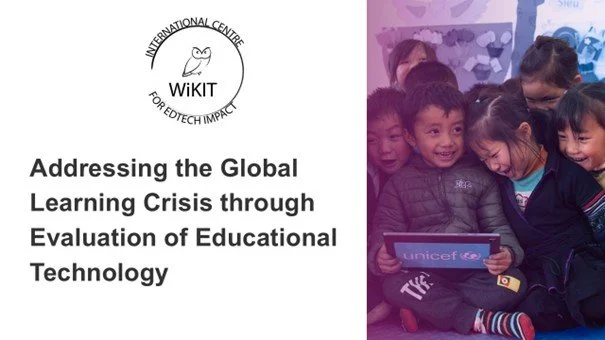
ICEI-UNICEF partnership